Real-time visa cost examples

Global Visa Cost Calculator 2026

Compare fees for 83+ countries.
Instantly plan your travel budget.

e-visa speed Budget planning Updated data
3D globe showing real-time visa cost examples — Japan $30, Canada $100 CAD, UAE AED 300, UK £90 and Schengen €90
Powered by Verified 2026 Embassy Data Trusted & verified data
Joshua White, Travel Documentation Writer By Joshua White, Travel Documentation Writer · Updated
At a Glance — Visa Costs Worldwide
Tourist visas: typical range $0 (visa-free / on-arrival) to $200+ depending on destination and passport
e-Visas: $20–$80 average — fastest processing (24–72 hours), available for 50+ countries
Schengen visa: €90 standard application fee (€45 for ages 6–12), 15–45 day processing
Hidden costs: service fees, biometric capture, photos, travel insurance, courier — often add 30–80% on top of visa fee
83 countries compared with current 2026 embassy fee data, free, no registration
Verify before applying: embassy fees can change — always confirm on the official consulate website
83+
Countries Covered
6
Free Visa Options
2026
Data Year
Real-time
Fee Updates

Tourist visa fees for top travel destinations

Country Tourist Visa E-Visa Visa on Arrival Processing
United States
$185 $21 30 days
United Kingdom
$115 $15 15 days
Germany
$90 15 days
France
$90 15 days
Australia
$190 $20 20 days
Canada
$100 $7 30 days
Japan
$30 5 days
United Arab Emirates
$90 $90 Free 3 days
Thailand
$40 $40 $35 5 days
India
$25 $25 $25 3 days
Turkey
$50 $50 $50 3 days
Singapore
$30 5 days

All Countries & Visa Fees

Complete visa cost database organized by region

Africa

13
Egypt
· $25 e-visa
Ethiopia
· $52 e-visa
Ghana
· $60 e-visa
Kenya
· $30 e-visa
Mauritius
Morocco
Nigeria
Rwanda
· $30 e-visa
Senegal
South Africa
Tanzania
· $50 e-visa
Tunisia
Uganda
· $50 e-visa

Americas

15
Argentina
Brazil
· $80 e-visa
Canada
· $7 e-visa
Chile
Colombia
· $52 e-visa
Costa Rica
Cuba
Dominican Republic
· $10 e-visa
Ecuador
Jamaica
Mexico
· $44 e-visa
Panama
Peru
United States
· $21 e-visa
Uruguay

Asia

27
Azerbaijan
· $20 e-visa
Bangladesh
· $51 e-visa
Cambodia
· $36 e-visa
China
Georgia
· $20 e-visa
India
· $25 e-visa
Indonesia
· $35 e-visa
Israel
Japan
Jordan
Kuwait
· $10 e-visa
Laos
· $50 e-visa
Malaysia
· $25 e-visa
Myanmar
· $50 e-visa
Nepal
· $30 e-visa
Oman
· $20 e-visa
Pakistan
· e-visa free
Philippines
Qatar
· $30 e-visa
Saudi Arabia
· $120 e-visa
Singapore
South Korea
· $40 e-visa
Sri Lanka
· $50 e-visa
Thailand
· $40 e-visa
United Arab Emirates
· $90 e-visa
Uzbekistan
· $20 e-visa
Vietnam
· $25 e-visa

Europe

25
Austria
Belgium
Bulgaria
Croatia
Czech Republic
Denmark
Finland
France
Germany
Greece
Hungary
Ireland
Italy
Netherlands
Norway
Poland
Portugal
Romania
Russia
· $40 e-visa
Spain
Sweden
Switzerland
Turkey
· $50 e-visa
Ukraine
· $65 e-visa
United Kingdom
· $15 e-visa

Oceania

3
Australia
· $20 e-visa
Fiji
New Zealand
· $23 e-visa

Did You Know?

Quick facts about global visa costs — and where to take your research next

Cheapest destinations

6 countries offer free or visa-free entry — the most budget-friendly places to travel.

Israel (Free) Pakistan (Free) Chile (Free) South Africa (Free)

Most expensive visa

New Zealand ($211) charges the highest visa fees, so plan your budget accordingly.

Save on visa fees

Compare e-visas, visa-on-arrival fees and embassy applications side by side to pick the cheapest route for your trip.

Understanding Visa Costs: What You Actually Pay

The headline visa fee is rarely the full price. A real visa application is made of several stacked charges — and the extras often add 30–80% on top. Here is exactly what goes into the total so you can budget with no surprises.

Person reviewing visa application costs and travel budget

Government / consular fee

The core fee charged by the destination's embassy or immigration authority. Fixed per visa type — e.g. €90 for a Schengen short-stay, $185 for a US B-1/B-2. Usually non-refundable even if you are rejected.

Service / visa-center fee

When you apply through an outsourced centre like VFS Global or BLS International, they add a handling fee (typically $15–$45) on top of the government fee. Optional premium lounges and "prime time" slots cost extra.

Biometric fee

Fingerprints and a digital photo are mandatory for most Schengen, UK, US and Canada applications. Sometimes bundled into the service fee, sometimes a separate $10–$30 charge.

Photos & documents

Compliant passport photos ($5–$15), plus printing, translations or notarised copies for some consulates. Small individually, but they add up across a family application.

Travel insurance

Schengen and several other visas require medical cover of at least €30,000. Expect $20–$60 for a short trip — and the policy must cover your full stay or the visa can be refused.

Courier & reciprocity

Passport return by courier ($10–$25), and for some nationalities a one-off reciprocity fee (e.g. US visas for certain countries) that mirrors what your own country charges. Easy to forget when budgeting.

Visa Cost Components Compared

Cost componentTypical amountMandatory?Notes
Government / consular fee$0–$200+YesNon-refundable; set per visa type
Service / visa-center fee$15–$45If using VFS/BLSAvoided by applying directly where possible
Biometrics$10–$30Most embassy visasSometimes included in service fee
Photos & documents$5–$20YesMust meet exact spec or get rejected
Travel insurance$20–$60Schengen + othersMin €30,000 cover for Schengen
Courier / reciprocity$10–$25 (+ varies)VariesReciprocity depends on nationality
Traveler saving money on visa application fees

How to Keep Your Visa Costs Down

  • Choose an e-Visa where available — usually cheaper and faster than embassy visas, with no service-centre surcharge.
  • Apply directly at the consulate when they accept it, to skip VFS/BLS handling fees.
  • Don't prepay flights or hotels — use a free dummy ticket and a hotel reservation so a refusal never costs you a non-refundable booking.
  • Check child & transit discounts — Schengen is €45 for ages 6–12 and free under 6; many transit visas are cheaper.

Key Visa-Cost Terms

Consular / government fee
The official, non-refundable fee charged by the destination country for processing your visa application.
Service fee
An extra handling charge added by an outsourced visa centre (VFS Global, BLS, TLScontact) on top of the government fee.
Reciprocity fee
A surcharge some countries apply to visitors whose home country charges their citizens — it mirrors the other nation's fees.
Biometric fee
The cost of capturing fingerprints and a digital photo, required for most Schengen, UK, US and Canadian visas.
e-Visa fee
The all-in online fee for an electronic visa applied for and issued over the internet, usually $20–$80.
Visa-on-arrival fee
The amount paid at the airport or border to obtain a visa on arrival, payable in cash or by card.

Ready to budget your trip? Run an instant estimate above, or prepare the rest of your application with a free dummy ticket, a hotel booking and our visa checker.

Frequently Asked Questions

Everything you need to know about visa costs

How much does a visa cost on average?
+
Visa costs vary widely depending on the destination country and visa type. Tourist visas typically range from free (visa-free or visa-on-arrival) to over $200 USD. Many countries offer e-visas between $20–$80 USD. Use our calculator to compare exact fees for your destination.
Which countries offer free visas?
+
Many countries offer visa-free entry or free visas on arrival. The exact list depends on your passport nationality. Currently, 6 destinations in our database offer free visa options. Use our Visa Checker tool to see which countries you can visit without paying a visa fee based on your specific passport.
What is an e-visa and how much does it cost?
+
An e-visa (electronic visa) is a digital visa you can apply for online without visiting an embassy. E-visa costs typically range from $20 to $100 USD depending on the destination country. The main advantage is convenience — you apply from home and receive your visa by email, usually within 24–72 hours.
Are there additional costs beyond the visa fee?
+

Yes, there may be additional costs such as service fees, photo fees, courier fees, and travel insurance requirements. Some countries also charge airport or departure taxes. Common additional costs include:

  • Passport Photos (set of 2)
  • Travel Insurance
  • Dummy Flight Ticket / Reservation
  • Hotel Booking Confirmation
  • Travel Medical Certificate
  • Bank Statement (certified)
  • Invitation Letter / Sponsorship
  • VFS / TLScontact Service Fee
  • Biometrics Collection Fee
  • Passport Return Courier
How accurate is the visa cost information?
+
Our visa cost data is regularly updated to reflect the most current fees as of 2026. However, visa fees can change without notice due to diplomatic relations, economic factors, or policy updates. We recommend verifying the exact fee with the official embassy or consulate website before applying for your visa.
How much is a Schengen visa in 2026?
+
A Schengen visa costs €90 for adults and €45 for children aged 6–12, while children under 6 are free. The fee is set by EU regulation and is identical across all 27 Schengen countries. It is non-refundable whether your application is approved or refused, and visa centres such as VFS Global or TLS Contact add a separate service charge on top.
How much does a US tourist visa (B1/B2) cost?
+
The US B1/B2 visitor visa costs $185, known as the MRV application fee. You pay it before your embassy interview and it is non-refundable regardless of the outcome. The same $185 fee applies to most non-petition-based nonimmigrant categories such as B, C, D, F and J visas.
How much does a UK visitor visa cost?
+
A UK Standard Visitor visa costs about £135 for 6 months in 2026. Long-term visitor visas cost roughly £506 for 2 years, £903 for 5 years, and £1,128 for 10 years. All UK visa fees are non-refundable if the application is refused or withdrawn.
Are visa fees refundable if my application is rejected?
+
No. Visa application fees are almost always non-refundable, whether your visa is approved, refused, or withdrawn. The fee pays for processing your application, not for a guaranteed approval. Confirm you meet the requirements before paying, because a refusal means losing the fee and reapplying.
Why do visa fees differ by nationality?
+
Visa fees often differ by nationality because of reciprocity — a country frequently charges your citizens the same amount your government charges its citizens. Bilateral agreements, EU rules, and visa-facilitation deals can also lower or waive fees for specific passports. That is why two travelers to the same destination can pay very different amounts.
What is the cheapest way to get a visa?
+
The cheapest options are visa-free entry, visa-on-arrival, and e-visas. Many e-visas cost only $20–50 and are issued online within 24–72 hours, avoiding courier and agency fees. Checking whether your passport qualifies for visa-free or visa-on-arrival access before applying is the single biggest way to cut visa costs.
How do I pay the visa fee?
+
It depends on the country and channel. E-visas are paid online by card during the application. For embassy visas you usually pay at a visa application centre such as VFS Global, TLS Contact or BLS, or via a bank receipt — the US uses an MRV fee receipt paid before booking the interview. Keep the receipt, as you must present it at your appointment.
Do children pay the same visa fee as adults?
+
Often no. Many countries reduce or waive fees for minors — a Schengen visa is €45 for children aged 6–12 and free under 6, and several e-visa programs discount or exempt young children. Always check the child rate for your destination, as it can noticeably lower a family's total visa budget.

About Visa Costs & Fees

Planning international travel requires understanding the true cost of a visa. Visa fees vary dramatically from country to country — some destinations welcome travelers with free visa-on-arrival access, while others charge several hundred dollars for tourist visa applications. Our Visa Cost Calculator aggregates official fee data from embassies and immigration authorities worldwide, giving you a clear picture of what to budget for your trip.

The type of visa you need also affects the total cost. E-visas (electronic visas) are often the most affordable and convenient option, allowing you to apply online without visiting an embassy. Visa-on-arrival options are available at many airports and border crossings, while traditional embassy visas may involve additional fees for document certification, courier services, and processing. Understanding these cost differences can help you choose the most economical visa route for your destination.

Beyond the base visa fee, travelers should budget for ancillary costs such as travel insurance (required by Schengen zone countries and others), passport photos, bank statement certification, and return flight bookings. MyJet24's comprehensive visa cost database covers all these factors, helping you plan a complete travel budget with no surprises. Whether you're a frequent business traveler or planning your first international adventure, our tools make visa research simple and accurate.

Calculating the total cost of a visa application including fees and extras

Need Professional Visa Documents?

Professional visa documents — embassy-ready, instant PDF delivery

256-bit SSL encrypted Secure payment via Stripe Money-back guarantee
Expert Guides
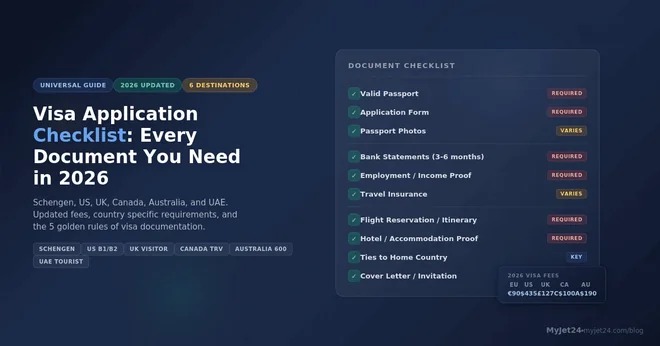
Visa Application Checklist 2026 Guide

Visa Application Checklist 2026

Every document you need

Read guide
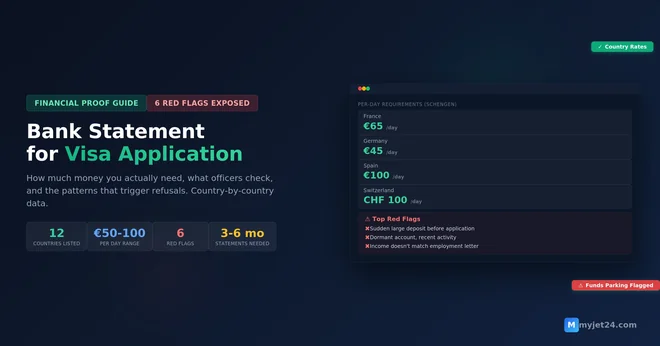
Bank Statement for Visa Application Guide

Bank Statement for Visa Application

How to present financial proof

Read guide
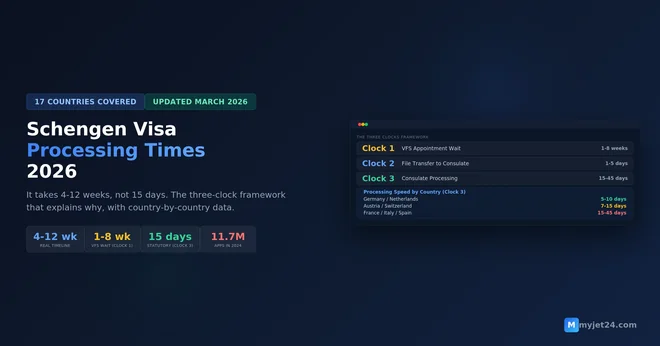
Schengen Visa Processing Times 2026 Guide

Schengen Visa Processing Times 2026

How long it takes by country & consulate

Read guide
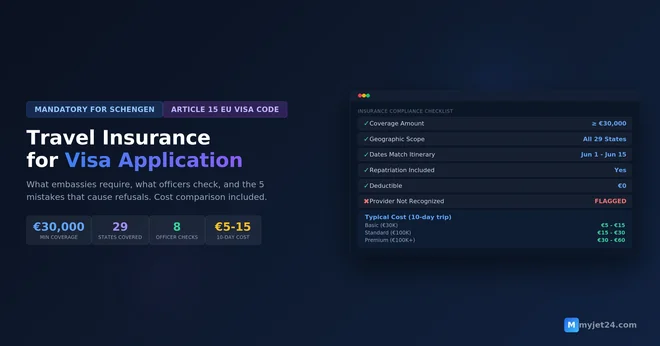
Travel Insurance for Visa Application Guide

Travel Insurance for Visa Application

What embassies require

Read guide