Get a personalized risk score based on your nationality, travel history, finances, and documents. Free, instant, and anonymous.
Select your passport nationality and destination country
Your visa risk score is calculated based on multiple factors that embassies and consulates consider during the application review process.
Strong approval chances. Your profile shows solid financial backing, good travel history, and complete documentation. Proceed with confidence.
Approval possible but not guaranteed. Some areas need improvement. Follow our recommendations to strengthen your application before submitting.
Significant challenges detected. We strongly recommend addressing the flagged issues before applying. Consider professional visa assistance for your case.
Use our complete suite of travel tools to build a strong visa application.
Check visa fees and requirements for your destination country.
Generate a verifiable flight reservation for your visa application.
Book accommodation proof required for your visa application.
Generate a professional cover letter tailored to your visa type.
A step-by-step visa application guide covering everything from document preparation to embassy interview tips. Based on analysis of thousands of visa decisions across 199 countries.
Every country has different visa requirements depending on your nationality. Before applying, you need to understand whether your destination requires a visa on arrival, an e-visa, or a traditional embassy visa. The visa requirement category directly impacts your approval chances and application complexity.
Pro Tip: Use our Visa Risk Checker above to instantly see whether you need a visa for your destination and what category your route falls into.
Financial proof is one of the top reasons for visa rejection worldwide. Embassies want to see that you can financially support your trip and have strong ties to return home. The required bank balance varies by destination, but the principle is the same: demonstrate stable income and sufficient funds.
Pro Tip: Applicants with monthly income above $3,000 and stable employment score significantly higher on our risk assessment. If your income is lower, compensate with strong savings and a detailed travel budget.
Your previous travel history is a key factor embassies consider when evaluating visa applications. A strong travel record to developed countries shows that you have complied with immigration rules in the past and are likely to do so again.
Pro Tip: If you have no travel history, consider applying for an e-visa to a less restrictive country first (e.g., Turkey, Thailand, Malaysia) to build your travel record before applying for harder-to-get visas.
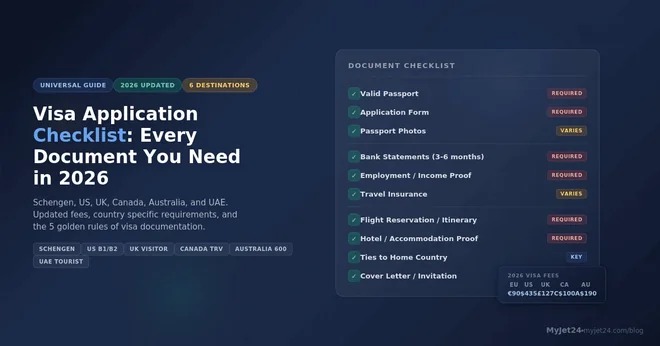
Missing or incomplete documents are one of the most common reasons for visa denial. Prepare every document thoroughly before submitting your application. Here is the essential checklist that applies to most embassy visa applications:
Pro Tip: Use our Dummy Flight Ticket and Hotel Booking tools to generate verifiable reservations without paying full price upfront.
Understanding why visas get rejected helps you avoid the most common pitfalls. Based on embassy data and visa decision patterns, here are the top reasons applications are denied:
Pro Tip: Run our Visa Risk Checker before applying to identify which areas of your application need strengthening. Addressing weak points before submission dramatically improves your chances.
Applying for a visa for the first time can feel overwhelming, but with the right preparation, approval is very achievable. First-time applicants face extra scrutiny because they have no travel history to demonstrate compliance, so extra preparation is key.
Pro Tip: Generate a professional Embassy Cover Letter tailored to your specific visa type and destination to make your application stand out.
Our Visa Risk Checker analyzes multiple factors including your passport strength, travel history, financial situation, employment status, and document readiness. Each factor is weighted based on real embassy decision patterns to generate a risk score from 0–100. The algorithm considers bilateral visa agreements, passport index rankings, and common approval/rejection patterns for your specific route.
Yes, the Visa Risk Checker is completely free. You can check your visa approval chances for any of our 199 supported countries without registration, payment, or sharing personal details. The tool is anonymous and instant—results are generated within seconds.
A low risk score (70–100) means you have strong chances of visa approval with your current profile. Medium risk (40–69) means there are some areas of concern, but approval is still very possible with proper preparation. High risk (0–39) indicates significant challenges that should be addressed before applying to avoid wasting application fees.
The most common reasons for visa rejection include: insufficient financial evidence (bank statements not showing adequate funds), weak ties to home country (no property, job, or family commitments), incomplete or incorrect application documents, previous visa rejections or immigration violations, and inconsistent information between documents. Our risk checker evaluates all of these factors.
Your passport nationality is one of the most significant factors in visa decisions. Passports are ranked globally based on visa-free access, diplomatic relations, and bilateral agreements. Citizens of countries with stronger passports (higher Henley Passport Index rankings) generally face easier visa processes, while citizens from countries with weaker passports may face additional scrutiny and documentation requirements.
Yes, a previous visa rejection can impact future applications, but it does not automatically disqualify you. Many applicants successfully obtain visas after a previous denial. The key is to address the original reason for rejection, provide stronger supporting documents, and always disclose past rejections honestly. Hiding a previous rejection is a serious offense that can lead to permanent bans.
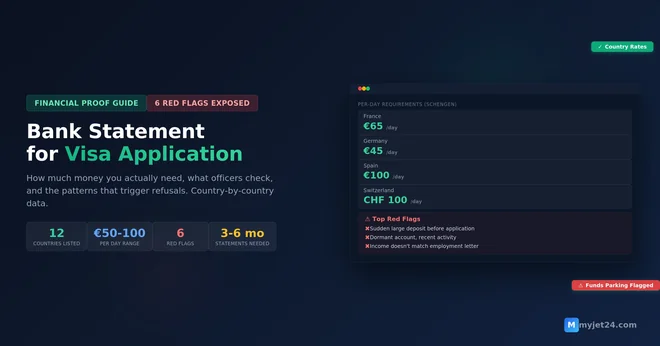
For a Schengen visa, you typically need to demonstrate approximately €65–120 per day of your planned stay. For a 14-day trip, this means €900–1,680 in available funds. Your bank statements should show consistent income over 3–6 months, not just a lump sum deposited before the application. Steady income flow matters more than just the final balance.
Travel health insurance is mandatory for Schengen visa applications (minimum €30,000 coverage) and strongly recommended for most other visa types. Even when not required, having travel insurance demonstrates responsible planning and can positively impact your application. Insurance should cover medical emergencies, repatriation, and the full duration of your trip.
A strong travel history demonstrates that you have previously complied with immigration rules and returned home on time. Applicants who have visited 5 or more countries, especially developed nations (US, UK, EU, Japan, Australia), are viewed much more favorably. Previous Schengen or US visa stamps in your passport can significantly boost approval chances for new applications.
Essential documents include: a valid passport (6+ months validity), completed application form, passport-sized photos, flight reservation, hotel booking or accommodation proof, bank statements (3–6 months), employment letter, travel health insurance, and a cover letter explaining your trip purpose. Additional documents may include property deeds, business registration, university enrollment, or a sponsor letter.
Never purchase non-refundable flights before your visa is approved. Instead, use a dummy flight reservation or book refundable/changeable tickets. Most embassies accept flight itineraries or booking confirmations—they do not require paid tickets. Our Dummy Flight Ticket tool generates verifiable reservations that embassies accept.
Processing times vary significantly by country and visa type. Schengen visas typically take 15–45 calendar days. US B1/B2 visas can take 2–6 months due to interview wait times. UK Standard Visitor visas take 3–6 weeks. E-visas for countries like Turkey or India can be processed in 24–72 hours. Always apply well in advance of your travel date.
You can run our Visa Risk Checker multiple times to compare your approval chances across different destinations. This is especially useful if you are flexible about your travel plans and want to choose a destination where you have the highest chance of approval. Each assessment is saved so you can compare results easily.
Tourist and business visas are assessed differently. Tourist visas focus more on financial capacity and ties to home country, while business visas emphasize the legitimacy of the business purpose, company sponsorship, and invitation letters. Business visas may have higher approval rates when backed by a reputable company but require more specific documentation.
If your risk score is high, focus on the specific recommendations provided. Common improvements include: strengthening your financial documentation with higher bank balances, obtaining an employment letter or proof of business, booking comprehensive travel insurance, preparing a detailed day-by-day itinerary, providing property deeds or other ties to your home country, and writing a compelling cover letter. Building travel history to easier destinations first can also help significantly.
Get your documents ready with our premium tools — professionally formatted flight reservations, hotel bookings, and embassy cover letters.