The Complete Guide to Embassy Cover Letters in 2026
How to write a professional cover letter for your embassy visa appointment
An embassy cover letter (also called a visa cover letter or embassy letter) is submitted at the start of your visa application file, directly addressing the consular officer. It summarizes your travel purpose, financial means, accommodation plan, and reasons for returning home — framing every other document in your application. While not always legally mandatory, consulates in France, Germany, Italy, and Spain explicitly recommend or expect one for short-stay visa applicants. A professional embassy letter reduces ambiguity and directly addresses the officer's four core approval criteria. MyJet24 generates yours in under 3 minutes.
Why this matters: France, Germany, Italy, and Spain — four of the highest-volume Schengen consulates — list a cover letter as a recommended or required document for short-stay visa applications. With a 14.8% global Schengen refusal rate in 2024 (EU Commission, ~1.73 million rejections), a persuasive, well-structured cover letter is the lowest-cost risk-reduction tool available to applicants — it costs nothing to submit and directly addresses the officer's primary assessment criteria.
Sources: Visa Guide World · EU Commission, May 2025
Amara N. (Nigeria → France, Schengen tourist visa): Her first application was refused with the note "insufficient evidence of travel purpose." She had submitted no cover letter. For her second attempt, she used MyJet24's Embassy Cover Letter Generator — which produced a letter addressing her purpose, itinerary, employer confirmation, return ties, and financial means in a consulate-readable format. Approved within 14 working days.
"The French consulate asked no questions. The letter answered everything before they could ask it." — Amara N., Lagos
What Is an Embassy Cover Letter?
An embassy cover letter, also known as a visa application cover letter or embassy appointment letter, is a formal document that accompanies your visa application when you submit it at an embassy or consulate. It serves as an introduction to your application, providing the visa officer with a clear overview of who you are, why you are applying for a visa, and what supporting documents you have included in your application package. Think of it as the executive summary of your entire visa application.
Unlike a visa support letter which focuses on financial and travel details, a cover letter specifically addresses the embassy, references your appointment details, and provides a structured summary that makes it easier for the visa officer to process your application. Many experienced travelers and immigration consultants consider the cover letter one of the most important documents in the application package because it sets the tone for how the visa officer perceives the rest of your submission.

Why You Need a Cover Letter for Your Embassy Appointment
Embassy visa sections process hundreds of applications daily. A well-written cover letter helps the visa officer quickly understand the purpose and scope of your application without having to search through multiple documents. It creates a positive first impression and demonstrates that you are an organized, well-prepared applicant who takes the visa process seriously.
A cover letter also provides an opportunity to address any potential concerns proactively. If there are gaps in your employment history, previous visa refusals, or unusual circumstances in your travel plans, the cover letter allows you to explain these situations in a professional manner before the visa officer discovers them in your documents. Addressing potential red flags upfront shows transparency and good faith, which visa officers appreciate.
Furthermore, the cover letter serves as a checklist for the visa officer by listing all attached documents. This ensures that no supporting document is overlooked during the review process and helps the officer verify that the application is complete. Incomplete applications are one of the leading causes of processing delays, and a comprehensive cover letter helps prevent this problem.

Essential Elements of an Embassy Cover Letter
A professional embassy cover letter should include the following components in a clear and logical structure:
The full name and address of the embassy or consulate where you are applying, along with the date of submission. This should appear at the top of the letter in standard business letter format.
Your visa appointment confirmation number and the date and time of your scheduled appointment. This helps the embassy staff locate your file and match the cover letter to your scheduled slot.
Your full name as it appears on your passport, nationality, passport number, and current address. These identifying details should match exactly with your application form.
A concise explanation of why you are traveling, where you will go, and how long you plan to stay. This should be a brief paragraph that captures the essence of your travel plans.
Key details including travel dates, destination cities, accommodation arrangements, and any planned activities or meetings. This gives the officer a quick overview without having to review each document individually.
The specific visa category you are applying for, such as Schengen Short-Stay Tourist Visa, UK Standard Visitor Visa, or US B1/B2 Visa. Being specific shows the officer that you understand the visa system.
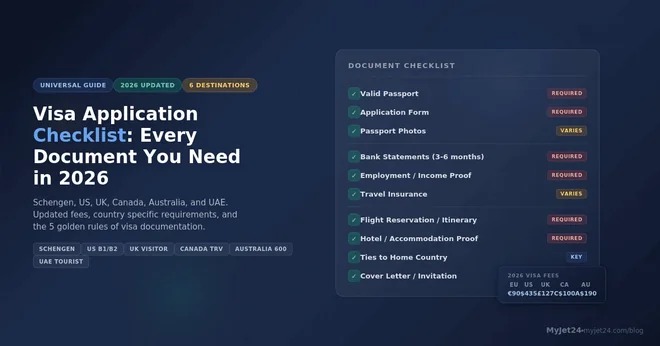
A numbered list of all documents included in your application package. This typically includes the completed application form, passport photos, passport copies, flight reservations, hotel bookings, travel insurance, bank statements, employment letter, and any other supporting documents.
A polite closing that reaffirms your intention to comply with all visa conditions and your willingness to provide additional information if required.
Cover Letter Writing Best Practices
Keep the letter concise and focused. A cover letter should be one to two pages maximum. Visa officers do not have time to read lengthy essays. Every sentence should serve a purpose, whether it is providing essential information, addressing a potential concern, or listing a supporting document. Avoid unnecessary adjectives, repetitive statements, or emotional appeals.
Use formal business letter language throughout. Address the letter to the Visa Officer or the Head of the Visa Section. Avoid first-name greetings, casual language, or overly familiar tone. The letter should read as a professional communication to a government official, not a personal message to a friend. Use proper paragraph structure with clear topic sentences and logical flow between sections.
Ensure absolute consistency between the cover letter and all other submitted documents. If your cover letter mentions travel dates of March 15 to March 28, every other document in your package should reflect those same dates. Inconsistencies, no matter how minor, erode the visa officer's confidence in the authenticity of your application.

Common Mistakes That Weaken Cover Letters
One of the biggest mistakes applicants make is using a generic template without personalizing it for their specific situation. Visa officers can immediately tell when a letter has been copied from the internet. Generic phrases, placeholder text that was not replaced, and one-size-fits-all language suggest that the applicant did not invest effort in their application. Each cover letter should be tailored to the specific embassy, visa type, and travel purpose.
Another critical error is failing to mention the appointment reference or visa application number. Without these identifiers, the embassy staff may have difficulty connecting the cover letter to the correct application file, potentially causing processing delays. Always include your appointment confirmation number prominently in the letter.
Neglecting to list attached documents is a missed opportunity. The document checklist portion of the cover letter not only helps the visa officer verify completeness but also protects you in case a document gets separated from your file during processing. If a document is missing, the officer can refer to your checklist and request the missing item rather than simply rejecting the application.
Addressing Potential Red Flags in Your Cover Letter
If you have had a previous visa refusal, address it briefly and professionally in your cover letter. Explain what has changed since the refusal, whether it is improved financial circumstances, additional supporting documents, or a clearer travel purpose. Do not dwell on the refusal or express frustration with the previous decision. Simply acknowledge it and focus on why your current application is stronger.
For applicants with employment gaps, self-employment income, or non-traditional financial situations, the cover letter provides an opportunity to contextualize your circumstances before the visa officer reviews your bank statements or employment documents. A brief, factual explanation is far more effective than leaving the officer to draw their own conclusions from ambiguous documents.

How Our AI Cover Letter Generator Works
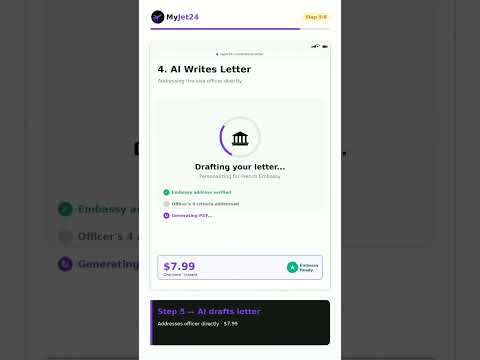
Our embassy cover letter generator creates professionally structured, personalized cover letters in under 30 seconds. Enter your appointment details, personal information, travel plans, and visa type, and the system generates a comprehensive cover letter that addresses all the elements embassy officials expect to see. The letter includes proper business formatting, a complete document checklist, and language appropriate for the specific embassy you are applying to.
 1
1Enter personal details
Full name, nationality, and passport number.
 2
2Select destination & dates
Country + travel dates auto-detect your embassy from 8,000+ missions.
 3
3Enter appointment details
Date, reference number, and visa type (optional but recommended).
 4
4Select travel purpose
Tourism, business, study, or medical — letter targets the right review criteria.
 5
5Preview, pay & download PDF
Pay $7.99 — instant print-ready PDF formatted to consulate standards.
Each generated letter is unique and specifically crafted for your situation, not a generic template with replaced fields. The document is delivered as a print-ready PDF with professional formatting and a unique verification reference number. At $7.99, it provides the quality of an immigration consultant's work at a fraction of the cost, helping you make the strongest possible first impression at your embassy appointment.
Embassy Cover Letter: Writing It Yourself vs. Using MyJet24
| Factor | Writing It Yourself | MyJet24 Generator |
|---|---|---|
| Time required | 30–90 minutes | Under 3 minutes |
| Consulate-correct format | Varies by knowledge | Always correct |
| Embassy auto-detection | Manual lookup needed | Automatic (8,000+ missions) |
| Addresses officer's 4 criteria | Rarely complete | Always included |
| Print-ready PDF output | Requires formatting | Instant download |
| Cost | Free (high time cost) | $7.99 one-time |