Dummy Ticket for a Dubai or UAE Visa 2026
Instant Flight Booking Confirmation for Dubai Visa Applications from DXB Airport - For Visa Applications Worldwide
Need a booking the airline can confirm? Choose Premium: a verifiable flight reservation ($7.90).
- 100% Free Forever
- No Payment Required
- Instant Download
100% Real Format
Booking confirmation with booking reference, for UAE visa centers and embassies
Instant PDF Download
Download your Dubai dummy ticket in 60 seconds with QR code
100% Free Forever
No credit card, no payment, no hidden fees for Dubai flights
What is a Dubai Dummy Ticket?
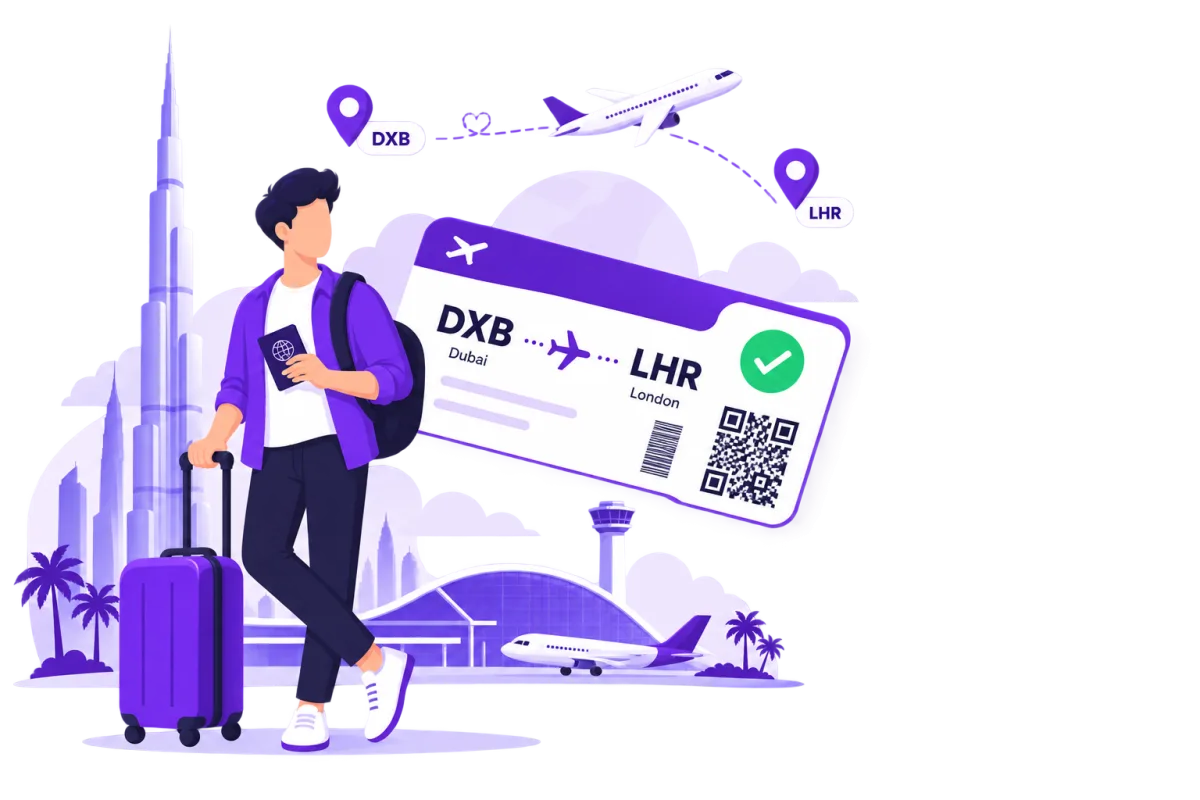
A Dubai dummy ticket (also called dummy flight ticket, onward ticket, or flight reservation) is a temporary flight booking confirmation that looks exactly like a real flight ticket. It's specifically used for Dubai visa applications, hotel reservations, proof of onward travel, and immigration purposes when traveling to the United Arab Emirates.
Our free Dubai dummy ticket generator creates professional PDF flight confirmations from DXB (Dubai International Airport) that include all necessary details: booking reference number, flight number, passenger information, departure and arrival times, and a scannable QR code. These dummy tickets are made for UAE visa applications, embassy visa centers, consulates, and airline check-in.
Key Features of Dubai Dummy Tickets
- Looks exactly like real flight booking confirmations from airlines
- Includes booking reference (PNR) and flight numbers from DXB
- Accepted by UAE visa application centers globally
- Works for Dubai tourist visa, visit visa, and transit visa
- Can be used for hotel bookings and proof of onward travel
- 100% free - no payment or credit card required
Why Do You Need a Dummy Ticket for Dubai Visa?
The United Arab Emirates and Dubai immigration authorities require all visa applicants to provide proof of onward travel. This means you must show that you have plans to leave Dubai/UAE after your visit. A dummy ticket serves as this proof without requiring you to purchase expensive, non-refundable flight tickets before your visa is approved.
Many travelers make the mistake of buying real flight tickets before receiving their Dubai visa approval, only to face rejection and lose hundreds of dollars on non-refundable tickets. Using a free Dubai dummy ticket from our generator eliminates this risk. You can submit your visa application with confidence, and only purchase real tickets after visa approval.
Popular Dubai Flight Routes from DXB
Dubai International Airport (DXB) connects to over 260 destinations worldwide. Here are the most popular routes for dummy ticket generation:
How to Generate Your Free Dubai Dummy Ticket (Step-by-Step)
Creating a free dummy ticket for your Dubai visa application takes less than 60 seconds. Follow this simple process:
Enter Flight Details
Select DXB (Dubai International Airport) as your departure or arrival airport. Choose your destination from 6,000+ airports worldwide. Select your travel dates and flight type (one-way or round-trip).
Add Passenger Information
Enter passenger names exactly as they appear on passports. Add passport numbers, nationality, and date of birth. You can generate tickets for up to 6 passengers at once for family applications.
Provide Contact Details
Enter your email address and phone number. This information appears on your dummy ticket and may be verified by visa officers. Use real, working contact details.
Generate & Download PDF
Click "Generate Dummy Ticket" and your professional PDF will be created instantly. Download the file and print it for your Dubai visa application. The ticket includes booking reference, QR code, and all required details.
Dubai Visa Requirements: Documents Needed
When applying for a Dubai visa (UAE tourist visa, visit visa, or transit visa), you'll typically need these documents along with your dummy ticket:
Required Documents
- Valid passport (6+ months validity)
- Passport-size photos (white background)
- Dummy flight ticket (proof of onward travel)
- Hotel booking confirmation
- Travel insurance (recommended)
- Bank statements (last 3-6 months)
- Cover letter explaining visit purpose
Flight Ticket Details
- Must show departure from DXB or arrival to DXB
- Dates should match visa application period
- Include booking reference number
- Show passenger names matching passport
- Professional PDF format required
- Can be round-trip or one-way
- Should include flight number and airline
Additional Tips
- Book refundable hotels until visa approved
- Ensure all document dates are consistent
- Check embassy-specific requirements
- Apply 15-30 days before travel
- Keep digital copies of all documents
- Print dummy ticket in color for best results
- Double-check all spelling and dates
About DXB - Dubai International Airport
Dubai International Airport (DXB) is the primary international airport serving Dubai, United Arab Emirates. It's located in the Al Garhoud district, about 4.6 kilometers east of Dubai city center. DXB is the world's busiest airport by international passenger traffic and the third-busiest airport in the world by total passenger traffic.
The airport serves as the main hub for Emirates Airlines and flydubai. It has three terminals handling over 260 destinations worldwide. When generating your Dubai dummy ticket, always use DXB as the airport code for Dubai International Airport. This is the code recognized by all visa authorities and immigration systems globally.
DXB Airport Key Facts
Countries That Accept Dubai Dummy Tickets
Our Dubai dummy tickets are accepted by visa authorities worldwide for UAE visa applications. Travelers from these countries commonly use dummy tickets when applying for Dubai visas:
And many more countries worldwide. Always check with your specific embassy or visa center for their exact requirements.
Dubai Dummy Ticket FAQs - Everything You Need to Know
Yes, a dummy flight ticket is required for Dubai visa applications. UAE immigration and visa centers require proof of onward travel to ensure visitors have plans to leave the country after their visit. Our free dummy ticket generator creates official-looking flight confirmations from DXB (Dubai International Airport) that are accepted by Dubai visa centers and embassies worldwide. Simply generate your dummy ticket, download the PDF, and submit it with your visa application documents.
Yes, using dummy tickets for visa applications is completely legal and widely accepted practice. A dummy ticket is simply a temporary flight reservation used as proof of onward travel. Thousands of travelers use dummy tickets daily for Dubai visa applications without any issues. However, you must purchase a real flight ticket for your actual travel - dummy tickets are only for visa application purposes, not for boarding flights.
No, using a dummy ticket will not cause visa rejection. Dubai visa centers and UAE embassies accept dummy flight tickets as valid proof of onward travel. Visa rejections occur due to other factors like incomplete documentation, insufficient funds, or incorrect information - not because of using a dummy ticket. Our dummy tickets are professionally formatted and include all required details (booking reference, flight number, passenger information) that visa officers need to verify.
Dubai dummy tickets from MyJet24 don't have an expiration date printed on the document. However, for visa applications, you should generate a dummy ticket with flight dates that match your intended travel period to Dubai. Most UAE visa applications require proof of travel within your visa validity period. If your travel dates change, you can generate a new free dummy ticket anytime with updated dates.
DXB is the IATA airport code for Dubai International Airport, the main international airport serving Dubai, United Arab Emirates. When generating your Dubai dummy ticket, you must use DXB as the airport code because this is how Dubai's airport is officially identified in all flight booking systems, visa applications, and immigration databases worldwide. Using the correct DXB code ensures your dummy ticket looks authentic and is recognized by visa authorities.
Yes, many Dubai hotels require proof of flight confirmation during reservation or check-in, especially for international guests. Our free Dubai dummy ticket generator creates professional-looking flight confirmations from DXB that can be used for hotel booking purposes. However, always check your specific hotel's requirements before booking. Some luxury hotels may have stricter verification processes.
Generating a free Dubai dummy ticket is simple: Visit MyJet24.com, select DXB (Dubai International Airport) as your departure or arrival airport, enter your destination and travel dates, add passenger information including passport details, provide your email and phone number, and click "Generate Ticket". Your professional PDF dummy ticket will download instantly with booking reference, flight number, and QR code. The entire process takes less than 60 seconds and requires no payment or credit card.
Yes, all Dubai dummy tickets generated by MyJet24 include unique booking reference numbers (similar to PNR - Passenger Name Record). Each ticket has a distinct reference code that makes it look authentic and professional. The booking reference appears prominently on the ticket along with flight number, departure time, arrival time, passenger names, and other essential details required for Dubai visa applications.
Yes, you can generate both one-way and round-trip dummy tickets for Dubai. When creating your free dummy ticket, simply select "Round-trip" flight type and enter both your departure from DXB and return to DXB dates. Round-trip tickets are often preferred for Dubai visa applications because they provide clearer proof of onward travel plans and show you intend to return home after your Dubai visit.
Our Dubai dummy ticket generator supports all major airlines operating from DXB including Emirates, flydubai, Etihad Airways, British Airways, Lufthansa, Air India, Qatar Airways, Singapore Airlines, and many more. You can select any airline for your dummy flight ticket. For Dubai visa applications, Emirates or flydubai (both UAE-based carriers operating from DXB) are popular choices as they add authenticity to your booking confirmation.
Yes, generating Dubai dummy tickets on MyJet24 is completely free forever. There are no hidden fees, no payment required, and no credit card needed. You can generate unlimited dummy tickets for Dubai visa applications at no cost. Unlike other services that charge $5-$50 per dummy ticket, we provide this service free to help travelers avoid expensive mistakes when applying for Dubai visas.
Dubai dummy tickets are generated and available for download instantly. After entering your flight details and passenger information, your professional PDF ticket is created in less than 60 seconds. There's no waiting period, no email verification, and no approval process. You can download and print your dummy ticket immediately for your Dubai visa application.
Dubai visa officers typically don't verify dummy tickets with airlines because they understand these are temporary reservations for visa application purposes only. The dummy ticket serves as proof of intent to travel and your ability to afford onward travel. However, our dummy tickets are professionally formatted with realistic booking references and flight details. If asked, simply explain that you will purchase final tickets after visa approval (which is standard practice).
To generate a Dubai dummy ticket, you need: departure airport (DXB for Dubai flights), arrival airport (choose from 6,000+ destinations), travel dates (departure and return if round-trip), passenger names (as on passport), passport numbers, nationality, date of birth, email address, and phone number. All this information appears on your dummy ticket and should match your other visa application documents exactly.
Yes, you can generate dummy tickets for up to 6 passengers at once. This is perfect for families or groups applying for Dubai visas together. Each passenger's information (name, passport number, date of birth) will appear on the same dummy ticket, or you can generate separate tickets for each person. All tickets will have the same booking reference number, making them appear as group bookings.
If you make a mistake on your Dubai dummy ticket, simply generate a new one. Since our service is 100% free, you can create unlimited tickets until you get all details correct. Always double-check passenger names (must match passport exactly), dates, airport codes, and other information before downloading. For Dubai visa applications, accuracy is crucial as mismatched information can cause delays or rejections.
For most Dubai visa applications, use DXB (Dubai International Airport) as it's the main airport serving Dubai and handles the majority of international flights. DWC (Al Maktoum International Airport) is Dubai's second airport but has limited international operations. Unless you specifically have reasons to use DWC, always select DXB for your Dubai dummy ticket to ensure it matches standard expectations for Dubai visa applications.
While you technically can use the same dummy ticket for multiple applications, it's better to generate a fresh ticket for each application. This ensures dates are current and relevant to each specific visa application. Since generating new tickets is free and takes only 60 seconds, there's no reason not to create a fresh, updated dummy ticket for each Dubai visa application you submit.
While not always mandatory, having travel insurance significantly strengthens your Dubai visa application. Many UAE visa centers recommend or require travel insurance coverage for the duration of your stay. Travel insurance shows you're a responsible traveler and can handle medical emergencies. You can purchase travel insurance after generating your free dummy ticket but before submitting your visa application.
For comprehensive guidance on using dummy tickets for Dubai visa applications, check our detailed Dubai Dummy Ticket Guide. The guide includes step-by-step instructions, common mistakes to avoid, tips for successful visa applications, and answers to technical questions. You'll learn everything about generating dummy tickets, what visa officers look for, and how to maximize your chances of Dubai visa approval.
Ready to Generate Your Free Dubai Dummy Ticket?
Instant PDF download • No credit card required • Perfect for Dubai visa applications • For UAE visa applications worldwide
Generate Your Free Dubai Dummy Ticket Now- 100% Free Forever
- No Payment Required
- Instant Download
- Professional Format